

- Home
- Investors Centre
- Sustainability
- Talent
- News
- Insights
- TH!NK
- Board of Directors
- Community
- MCB Offices
Contact Info
Oil crisis: A wake-up call for Mauritius’ energy transition commitments
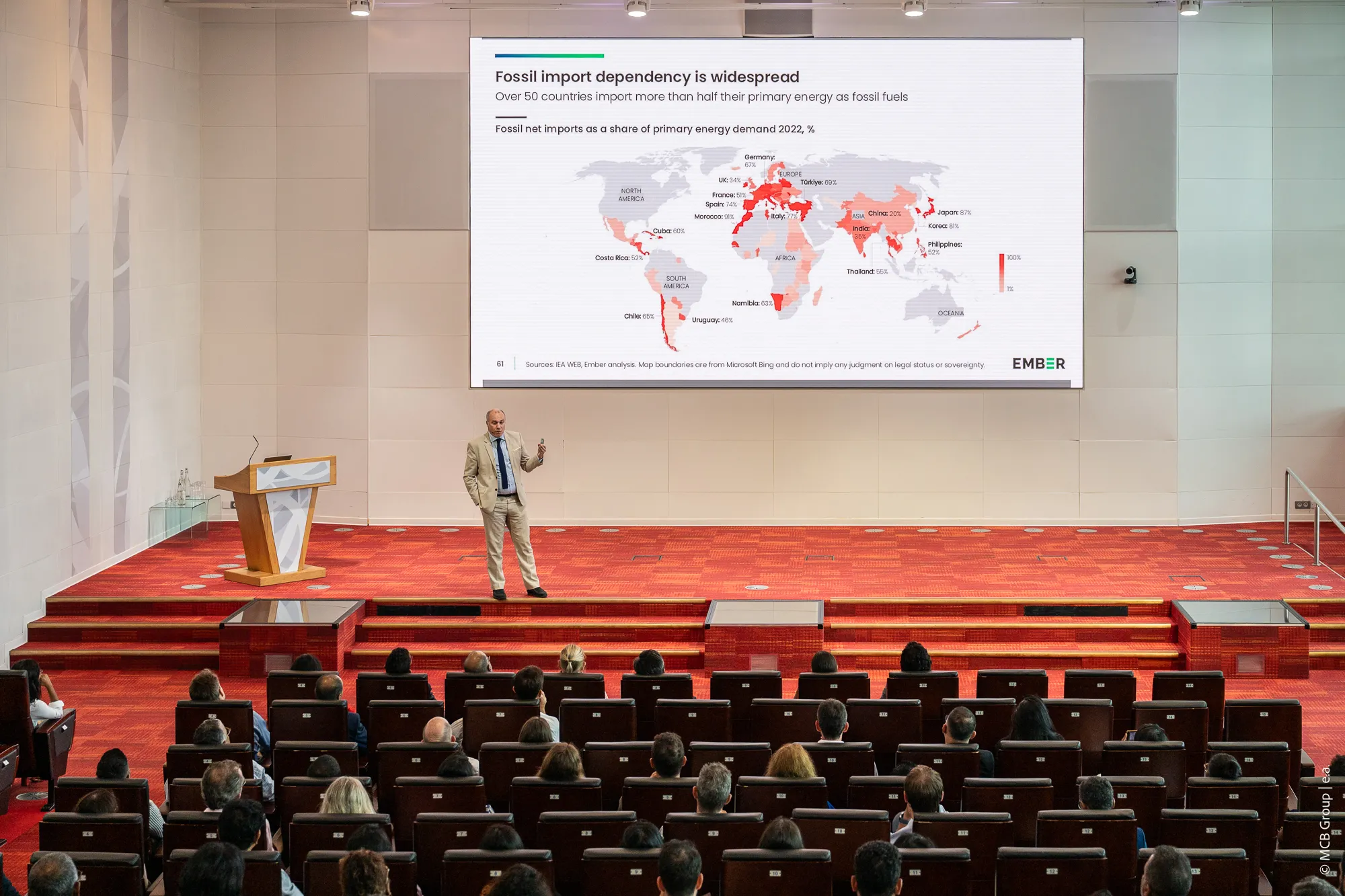
- Geopolitical expert Francois Gemenne addressed the business community through a conference organised by Business Mauritius and took part in the latest episode of MCB Talk
- The country’s sovereignty and continued economic growth are compromised by over-reliance on commodities it doesn’t control
- Volatility will be exacerbated with continued flouting of international law
The war in Iran is reinforcing the urgency of Mauritius's energy transition, especially for it to maintain its national sovereignty, said geopolitical expert Francois Gemenne during a short visit to Mauritius in March 2026.
Speaking both on the latest episode of the podcast MCB Talk and at a conference organised by Business Mauritius on the eve of the country’s Independence Day, the member of the Intergovernmental Panel on Climate Change asked, “What is the meaning of independence when you’re so dependent on commodities on which you have no control?”
He is, of course, referring to the fact that global energy markets remain highly sensitive to geopolitical developments. Disruptions to critical maritime routes such as the Strait of Hormuz, through which around 20% of global oil flows, can quickly lead to supply shocks and sharp price volatility.
For Mauritius, which still relies heavily on imported fossil fuels, such disruptions highlight the country’s exposure to external shocks.
Francois Gemenne believes this should be a wake-up call for countries like Mauritius and says it would be a mistake to think the situation will return to normal once the war is over. Volatility, he insists, is here to stay, the more so since international law is being so openly flouted. As imperfect as international law was, it at least lent a degree of predictability to world events, including the price of commodities.
“Now that international law has become some kind of illusion, it also means that commodity prices are likely to become even more volatile, even more unpredictable, which means that if industries want to stay competitive, if countries want to maintain their energy sovereignty, they will need to stop using commodities whose prices are volatile,” he said.
For many countries, energy transition is increasingly about strategic autonomy. Unlike fossil fuels, renewable energy sources such as solar and wind are local resources that can strengthen energy independence and reduce vulnerability to external shocks.
Transitioning to an energy mix that’s not reliant on fossil fuels is not just about climate change, the expert added.
“Yes, this should be a clear reminder, especially at a time when science is under attack, where climate denialism is higher than ever, that at the end of the day, it is not just about the climate, but also about energy sovereignty and the control over prices, on the condition that we are ready to learn from past mistakes”, he said.
For an island economy like Mauritius, expanding renewable energy capacity therefore represents not only an environmental objective but also an opportunity to improve energy security and price stability.
The energy transition is also reshaping global competitiveness. Countries that invest early in clean energy technologies are positioning themselves for the next phase of economic growth.
China, for example, has become a global leader in solar energy, electric vehicles and battery production, investing massively in the technologies that will power the electricity-based economy of the future.
This transformation signals a broader shift: the 21st century will increasingly be powered by electricity, and countries that adapt quickly will gain a strategic advantage, the expert added.
For Mauritian businesses and policymakers alike, the discussions highlighted how global developments—from geopolitical tensions to energy market volatility—can directly affect competitiveness and economic stability.
By hosting François Gemenne and facilitating these conversations, MCB continues to provide a platform for dialogue on the global trends shaping the future of Mauritius and its economy.
Recent Articles
TH!NK


Subscribe to our Email Alerts
Stay up-to-date with our latest releases delivered straight to your inbox.
Contact
Don't hesitate to contact us for additional info
Email alerts
Keep abreast of our financial updates.