

- Home
- Investors Centre
- Sustainability
- Talent
- News
- Insights
- TH!NK
- Corporate Governance
- Who we are
- Board of Directors
- Community
- MCB Offices
Contact Info
MCB Microfinance: 10 years of bridging the gap
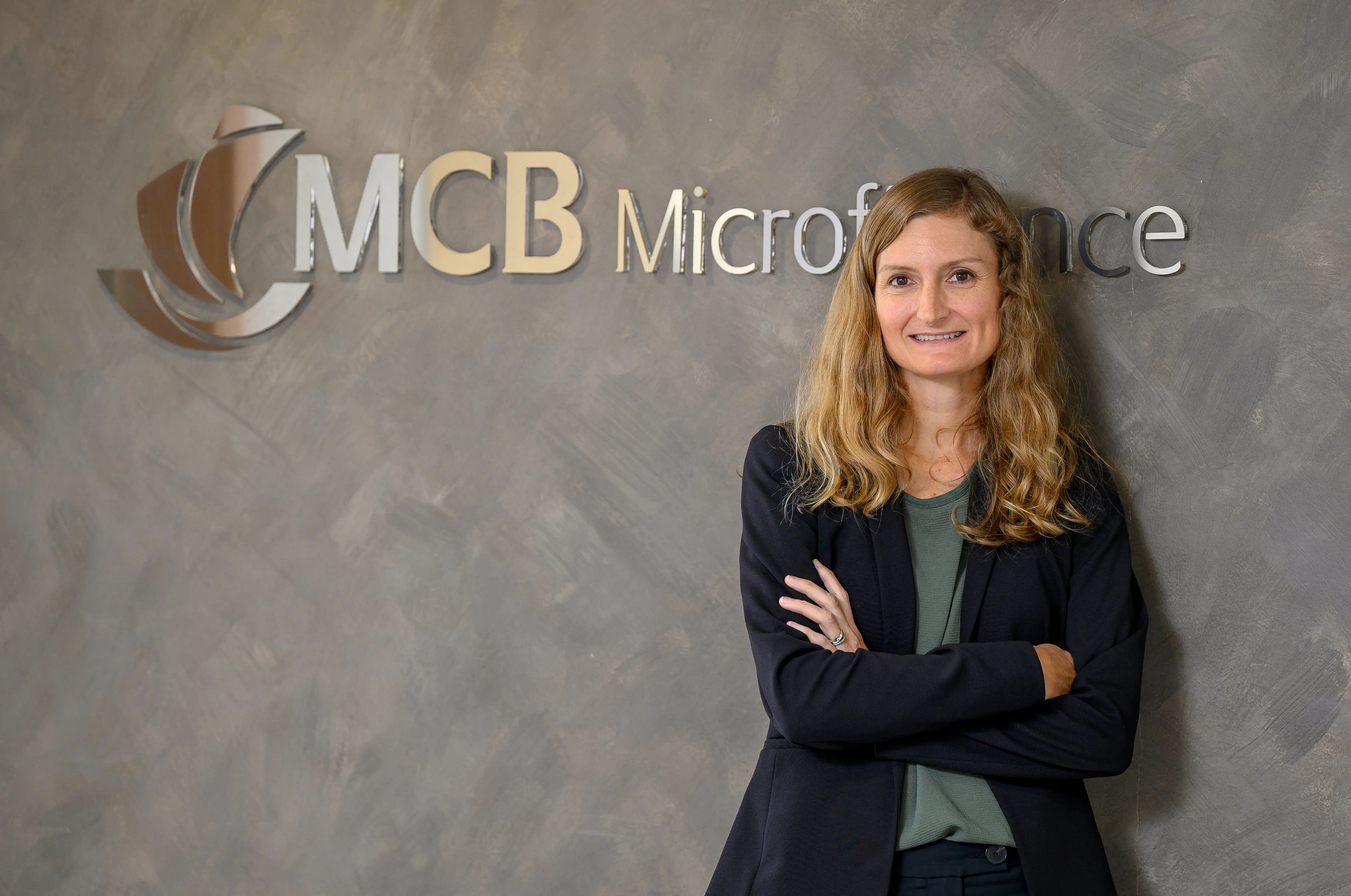
- MCB Microfinance often acts as the stepping stone for entrepreneurs who aren’t immediately bankable due to social and financial exclusion
- In Mauritius, thousands of small entrepreneurs are in this grey zone between the informal and formal economy
- Micro and small entrepreneurs play a vital role in the local economy
Have you ever wondered who finances microbusinesses such as your local dhollpuri seller or your next-door tabagie? Some businesses are too small or too informal to qualify for a bank loan. And for ten years, MCB Microfinance, a subsidiary of MCB Group, has been bridging the gap between the country’s formal and informal economic sectors.
“MCB Microfinance addresses a social challenge, which in our case, is financial exclusion”, explains its CEO, Aurelie Leclezio, on the latest episode of MCB Talk, marking the 10th anniversary of the social business. The objective, she says, is to provide access to finance to “people who are often outside the traditional banking system”, adding that this is, however, a balancing act because while the aim is to empower people, “we must ensure that we don’t add any additional indebtedness pressure”.
The paradox at the heart of every economy is that the people who need financing the most are often the least likely to obtain it. This is the story of economic exclusion the world over – a point-blank refusal by the bank to finance a project, an idea, a dream, leading very often to the urge to give up. But the problem is that when people are excluded from finance, they are often excluded from opportunity.
The reasons for the exclusion have nothing to do with an active decision by banks to exclude people but are rather a side-effect of the economic system - generally, people from these poor backgrounds lack the very things the formal financial system requires: audited accounts, collateral, documented cash flows, and years of financial history.
In Mauritius, thousands of small entrepreneurs operate in this grey zone between the informal and formal economy. They run food businesses from their kitchens, manage neighbourhood shops, sell goods and services, and generate income for their families. They work, produce and contribute to the economy while often remaining invisible to the financial system.
This is precisely the gap MCB Microfinance was created to address ten years ago.
"Not everyone is immediately bankable in the traditional sense," says Aurélie Leclezio. "But that does not mean they should be excluded from economic opportunity."
And yet, says Aurelie, while there are “several organisations doing meaningful work to support vulnerable groups and entrepreneurs, including NGOs, public institutions and development programmes”, MCB Microfinance does essential work in this space, having given over the past ten years, “financial access to many entrepreneurs who might otherwise have remained unsupported or remained dependent on informal financing.”
When discussions turn to poverty, the conversation usually revolves around social assistance. Yet aid relieves pressure; it does not necessarily create opportunity. Economic inclusion does, and this is done through strong proximity to the client. “This means that we will spend a lot of time visiting our clients to get to know them as entrepreneurs, but also as people”, says Aurelie, adding that her team of Relationship Officers take the time to observe and understand their clients’ business activities, discuss cash flows, sometimes even help them reconstruct their cash flows and “assess whether the loan they are asking for will genuinely help rather than create additional pressure on them”.
Over-indebtedness is a real challenge for any business, but even more so for micro businesses; the team at MCB Microfinance ensures that every loan disbursed is a calculated risk for both clients and the company. “And if we’re good at our jobs, we take very few risks”, says Aurelie.
Micro and small entrepreneurs contribute to employment, local production, services, and community life in general, the CEO adds. “By supporting them as a group, we are supporting livelihoods, families, and, more broadly, a more inclusive local economy”, she concludes.
If, for some clients, MCB Microfinance is a stepping stone to eventually becoming an SME with a bank account with MCB Business Banking, that’s not necessarily the definition of success Aurelie Leclezio gives for her clients.
“Not every client will follow that path obviously because each situation is different (...) however when it does not happen we may witness different kinds of successes for instance sometimes our financing might have helped the business to survive or it can be that now an extended family is able to live off the business (...) but what is the most important to us is that at the end of the day by facilitating the access to credit we allowed the micro entrepreneur to make certain decisions and investments that hopefully impacted positively on his business and eventually on his family's.”
For MCB Group, the initiative reflects a broader conviction about the role financial institutions can play in society. Financial inclusion is not just a social objective; it is also an economic one.
Read the full MCB Talk transcript here: MCB Talk with Aurélie Leclezio
Recent Articles


TH!NK



Subscribe to our Email Alerts
Stay up-to-date with our latest releases delivered straight to your inbox.
Contact
Don't hesitate to contact us for additional info
Email alerts
Keep abreast of our financial updates.