

- Home
- Investors Centre
- Sustainability
- Talent
- News
- Insights
- TH!NK
- Corporate Governance
- Who we are
- Board of Directors
- Community
- MCB Offices
Contact Info
“Green loans will not be cheaper forever”
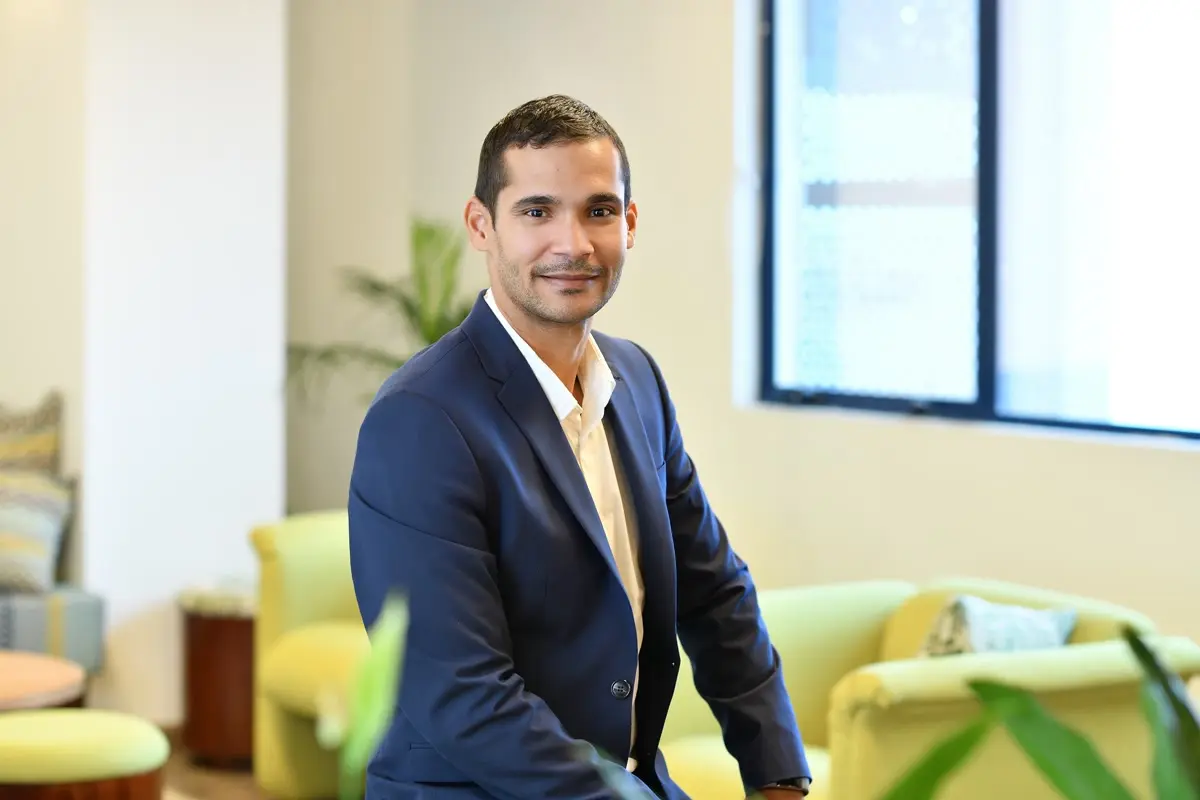
- MCB has scaled up its sustainability commitment to a Rs 25 billion credit line
- Sustainable finance will become mainstream finance in the medium term
- Companies should make the most of cheaper finance to green their operations before it starts costing too much
MCB’s sustainable credit line has just been bumped to Rs 25 billion, showing that the bank is putting its money where its mouth is on its sustainability agenda. But the Group Sustainability Manager, Stephane Lebon, says the “greenium” will not last forever as sustainable finance is set to become mainstream, with concessional rates eventually rising to real economy-driven standardised levels
What is a sustainable loan and what activities does it cover?
A sustainable loan finances projects that meet the green or social criteria in our taxonomy. In practice, that can mean energy efficiency, renewable energy, water treatment, the circular economy, access to essential services, or inclusive development. If the project is bankable and the client’s credit profile supports it, the financing can be offered on more favourable terms. The taxonomy sits within MCB’s Sustainable Finance Framework, so we have a structured way to say what qualifies as sustainable finance — and just as importantly, what does not.
What exactly is a Sustainable Finance Framework?
It is the document that explains how we identify, assess and govern sustainable finance. It has two parts. First, the internal process: how we ensure a project is properly reviewed and aligned with our standards, and which product type it covers. Second, the taxonomy: the list of activities that can be considered green or social in our context. So, it is both a governance tool and a classification tool. It gives credibility to the offer because the framework and its taxonomy have been vetted against clear criteria by an internationally recognised ESG rating agency
And the framework helps MCB secure cheaper money so that, in turn, it can finance sustainable ventures at a preferential rate?
For now, yes, it may happen. In the Global South, sustainable finance can still benefit from what is known as a “greenium”, which is generally absorbed by Development Finance Institutions (DFIs), with funding costs generally lower because the money is earmarked for green or sustainable projects. In markets like ours, this matters because we still need to encourage companies to invest in transition, and the fact is, Development Finance Institutions still have, for now, the appetite to support ESG-related projects via committed intermediaries like MCB at relatively attractive rates.
But we should not assume this will last. In the more mature markets of the Global North, sustainable finance is becoming mainstream finance. As that happens, the pricing advantage narrows. That is why the message to clients is simple: if you have projects that make your business more resilient, cleaner or more efficient, come and talk to us now.
Why do you believe things will change in the Global South?
I think that in ten years or so, sustainable finance will look much more like mainstream finance, as is currently the case in Europe, meaning it will no longer be a separate category but the expected standard. Today, in our region, the ecosystem is still maturing, and preferential rates are part of the incentive package. Businesses should use this window to transition, reduce exposure and futureproof themselves. Waiting will only make the same investments more expensive, not to mention the costs associated with potential damage from not investing early in the necessary transition.
What are we talking about when we say “cheaper”? What is the rate at which MCB is offering sustainable loans?
MCB has a suite of green offers under different conditions, and the sustainable loan is available at the Prime Lending Rate minus 1% (PLR-1), whereas other mainstream loans are priced at or above the PLR, depending on risk. But this is now; I think we can’t overstate the fact that, going forward, the distinction between green and mainstream finance will gradually disappear.
Like Philippe Zaouati, the ex-CEO of Mirova, a sustainable asset management firm, said, “tomorrow’s finance will be sustainable, or it will not be”. For him, conventional finance will no longer exist because of the urgency of the transition.
So basically, this means that MCB clients should start working on getting the green projects ready so they can benefit from the preferential rates?
Absolutely; otherwise, it’s going to cost them too much, not only in terms of access to finance but also in terms of managing damage. I encourage them to get their projects ready and come talk to their relationship managers.
You mean they’ll need to invest in green solutions to aid their energy transition anyway, and they may as well do it when the money is cheaper?
That's it. Today’s investment will help avoid very costly damages over the next ten to fifteen years. The problem with sustainable finance is that it’s often preventive in the sense that it’s about avoiding damages in the future, so it can be hard to feel that sense of urgency, but I think it’s important businesses view this as an investment in their future rather than a cost. Because what it does is prevent you from having to incur costs in the future, which would arguably be even more. And the fact of the matter is that today, this financing is available at a concessional rate, which it will not be in the future.
Why does MCB’s sustainable finance framework also have a social component, not just an environmental one?
Because we believe that transition is not just about CO2 emissions and environmental pollution. Inclusion is also an important part of it, and again, it is context-based, whether, for instance, we believe there’s a need nationally to encourage access to finance for women, whether housing is an issue, etc. It could be any number of issues we’ve identified, such as access to essential services like health, education, telecommunications, and internet access. All this also falls within the framework of social projects because it, if you like, allows for more inclusive societal development.
What you’re saying about green finance becoming mainstream finance makes sense in theory, and yet there’s still this tug-of-war where sustainability and mainstream finance are concerned because, historically, finance didn’t concern itself with the planet, and growth is generally impacted when we throw in sustainability frameworks. Will this ever be resolved?
There will always be scepticism. That is normal. But the direction is no longer theoretical. Regulation, client expectations, climate impacts, and funding conditions are all moving in the same direction. Sustainability is no longer an optional layer added at the end of a financing discussion. It is increasingly part of how we assess risk, opportunity and financing structure.
But it has an impact on the direction the world goes. The ‘drill baby drill” is really happening. So, it remains a matter of choice for financial institutions in terms of where they position themselves on their sustainability agenda.
For a bank, there are two sides to the equation: opportunity and risk. On the opportunity side, companies need to green their operations, improve efficiency and build resilience. We can finance that. Companies with stronger ESG performance — proper metrics, policies and processes — tend to be better prepared, more resilient and often better placed to access capital. From the bank’s perspective, financing more resilient clients is also sound risk management. If a company is better prepared for shocks, its probability of default is lower. That matters to us.
The taxonomy points to many transition opportunities: energy efficiency, water treatment, circular economy, cleaner industrial processes and social inclusion. These are not abstract themes; they are real investment needs. The other side is risk. If we continue financing activities that are not resilient or are exposed to transition pressures, we increase our own exposure to climate-related risks — both physical risks and transition risks.
What happens if banks ignore those risks?
At some point, those risks show up in the loan book. A company that has not invested in resilience can be hit by supply chain disruptions, cyclones, flooding, fires, or higher operating costs. If its business is affected, its ability to repay is affected too. The same is true of transition risk. A company that remains highly dependent on fossil fuels is more vulnerable to price shocks, geopolitical events and changing regulation, as we’ve seen recently. Production costs rise, prices rise, demand weakens, and repayment capacity can deteriorate. It becomes a vicious cycle.
The reality is that it’s in banks’ interest to provide sustainable finance, not just because it creates opportunities, but also because failing to do so poses major risks for banks. The former governor of the Bank of England and current Prime Minister of Canada, Mike Carney, called it “The tragedy of the horizons” to explain how a short-term focus prevents society from addressing long-term disasters like climate change because the worst impacts occur far beyond decision-making cycles.
Recent Articles

TH!NK





Subscribe to our Email Alerts
Stay up-to-date with our latest releases delivered straight to your inbox.
Contact
Don't hesitate to contact us for additional info
Email alerts
Keep abreast of our financial updates.