

- Home
- Investors Centre
- Sustainability
- Talent
- News
- Insights
- TH!NK
- Corporate Governance
- Who we are
- Board of Directors
- Community
- MCB Offices
Contact Info
The price of picture-perfection
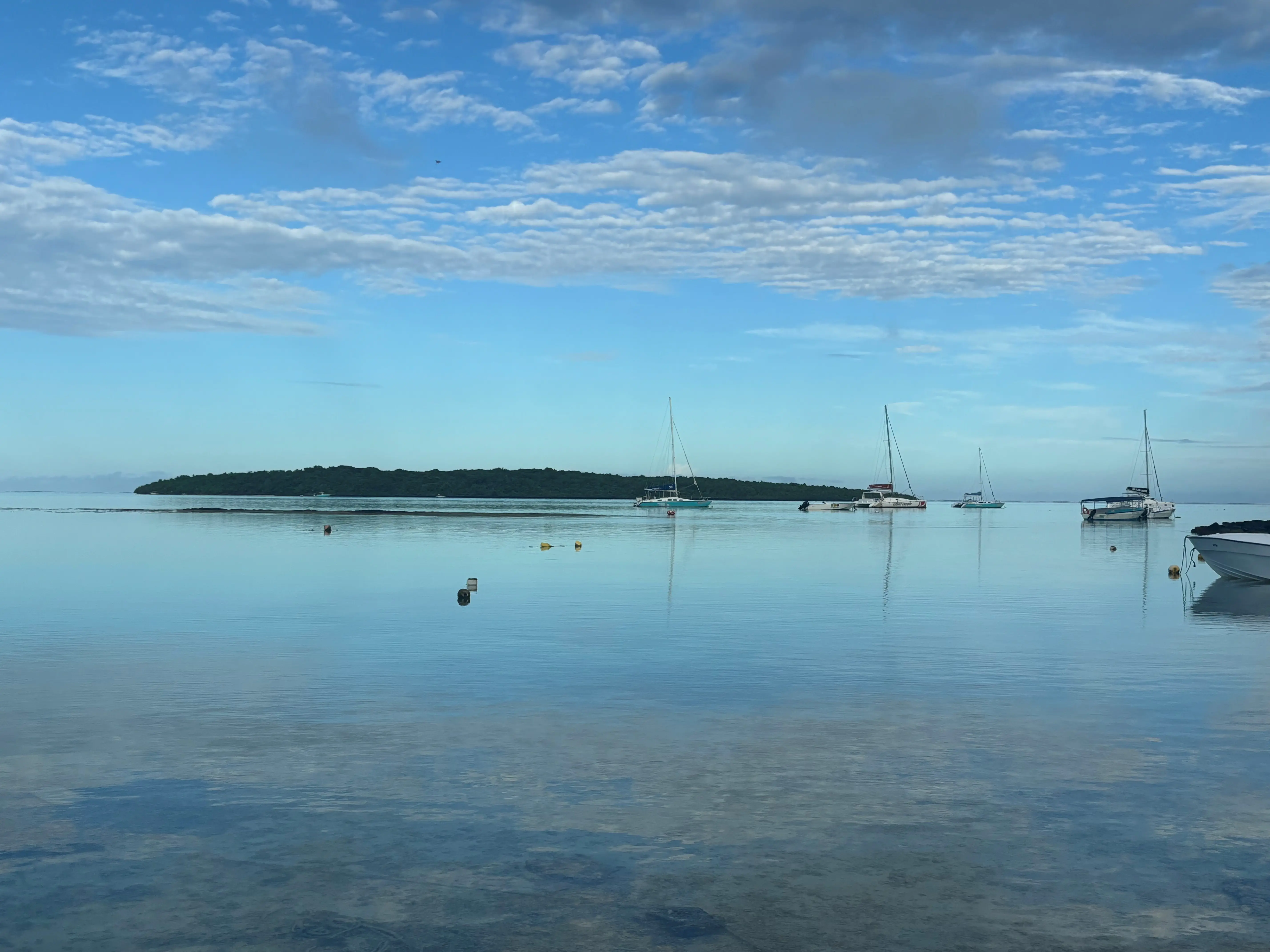
- Climate change is striking at the heart of the Mauritian tourism industry, heavily reliant on the “sun, sand and sea” concept
- Banks like MCB have a real stake in the country’s tourism industry, having financed it for over half a century
- Climate finance is absolutely critical to combat Climate Change
In today’s opinion-first culture, there’s not much place left for indisputable facts. But here’s one: Climate Change has landed in Mauritius, and it’s not good news, especially for our tourism industry. And another: There’s still time to shock-proof ourselves, and banks like MCB are here to provide the much-needed capital the Mauritius tourism industry will need to build itself better and stronger.
At least three beaches along the Mauritian coastline, which host world-renowned hotels, are currently being “worked on” to replace lost sand, install barriers to protect the coastline, and reprofile the shore, while also strengthening the structures built in the sand.
The rehabilitation works are a far cry from the picture-perfect beaches the country has sold the world for years now. They are also causing a loss of earnings for hotels and angering inhabitants and fishers, but are essential for managing sea-level rise, the damage caused by storm surges and cyclones, the loss of natural buffers like wetlands and coral reefs, and, of course, the impact of coastal development.
This strikes at the heart of our tourism industry, heavily reliant on the “sun, sand and sea” concept.
Climate-related Risks
It also strikes banks like MCB that have a real stake in the country’s tourism industry, having financed it for over half a century. The bank has recently published its first Climate-related Financial Risk policy internally, following the Bank of Mauritius's publication of the Guideline on Climate-related and Environmental Financial Risk Management a few years ago, says Krishen Patten, MCB’s Head of Financial Risk.
He explains that climate-related financial risk management is still in its infancy because the impacts of Climate Change, although visible and felt, are so hard to predict. “The predictability of climate-related risk models is worth what it’s worth given the limited data we have”, he says.
In other words, yes, we know the impacts of Climate Change are set to take their toll on the country, affecting the business models and bottom lines of companies in vulnerable sectors like tourism, but it’s not known when and to what extent the country will be affected. Until then, MCB will keep on financing these sectors.
Sun, sand and sea
It’s hard to say whether the fathers of Mauritius’ tourism industry could have predicted its phenomenal success when the foundations were laid in the 1950’s and 60’s. The vision, though, cannot be faulted - fly out wealthy tourists to remote, sun-drenched beaches where they could stay in luxurious self-contained coastal resorts, attended hand and foot by smiling natives.
Over half a century later, the Le Morne Plage Ltée (1954) and the Chaland Hotel (1960), now in more modern incarnations, share the coast with nearly a hundred hotels, which together occupy 90% of the country’s coastline. From 1550 visitors in the 1950’s, the country welcomed 1.4 million tourists last year. The first quarter of 2026 saw a 6.8% increase in numbers, followed by a 3.7% dip in April, likely due to higher airfares linked to the oil crisis.
But the hope is a return to normal, if not a boom, post-COVID-like, when the crisis is over.
What could possibly go wrong?
Changing climate
It already has.
Climate Change came knocking with beach erosion driven by rising sea levels, threatening beachfront hotels and recreational areas and affecting 58% of hotels in Mauritius.
Extreme weather events such as cyclones, floods and droughts make everyone nervous, especially in years like this one, when they have so far been conspicuously absent, leading everybody to wonder how bad the next one will be. The impacts of extreme weather cost the country more than USD 110 million per year.
There’s already the fear that Mauritius could become water-scarce by 2030. This will directly impact the quality of service – affecting pools, landscaping, and guest services - and increase operational costs associated with desalination activities and water transportation. 63% of hotels report freshwater shortages affecting operations.
Coral reef degradation and ocean warming directly affect popular tourism activities like diving and snorkelling, reducing the destination’s attractiveness. Modelling shows a 17% drop in international arrivals.
Rising temperatures will also lead to environmental degradation as Climate Change accelerates biodiversity loss and habitat degradation, including wetland loss and stress on marine ecosystems. This will then have a ripple effect on ecotourism and nature-based experiences, which modern tourists care about.
And of course, climate stress increases energy use (especially for cooling) and water demand, particularly in an industry that is already resource intensive.
Losses can be contained
The tourism sector, which brings in USD 2.1 billion, accounting for around 20% of Mauritius’ GDP, is projected to shrink by 6-11% annually by 2050, resulting in a loss of USD 125–230 million per year.
But this is, of course, in the “business-as-usual” scenario. If the industry and the country don’t take adaptive, mitigative, and rehabilitative measures.
And in the event of a wake-up call, a World Bank report on the Country Climate and Development Report, released recently (and to which we owe the figures mentioned in this article), says that losses can be reduced and contained. There is, says the report, a resilient, high-value tourism model that can limit revenue losses and protect beaches and reefs while maintaining the destination’s competitiveness.
The good news? Not only are the hoteliers aware of the situation, but many are also proactively taking steps to avoid catastrophic scenarios, especially during renovation projects, says MCB’s Head of Mauritian and Regional Corporates (MRC), Aldo Sydonie.
Banks are, in fact, increasingly concerned about Climate Change, if only because their clients’ businesses will be affected, which, in turn, will affect their ability to repay their financing. But it’s not purely a mathematical equation.
Climate finance is crucial to the fight
In 2023, four years after it launched its corporate sustainability agenda, Success Beyond Numbers, MCB inaugurated its sustainable loan through a MUR 10bn credit line to finance mitigation and adaptation projects, such as those that will need to be undertaken to shockproof companies from the impacts of Climate Change. Fast-forward four years, and the credit line is set to multiply to cater for the increasing demand for sustainable finance.
This line finances anything from the hotel refurbishments that protect the buildings, beach erosion works, energy-saving equipment, circular economy projects- in short, every project that falls within MCB’s green and social taxonomies.
Aldo says the reaction to the sustainable loan “was overwhelmingly positive and clearly responded to a need businesses had”. The fact that the sustainable line comes with a preferential rate also speaks volumes about MCB’s commitment to fighting the impacts of Climate Change.
“Climate finance is absolutely critical to combat climate change. It provides necessary funding for reducing emissions and adapting to inevitable climate impacts, serving as the foundation for achieving Paris Agreement goals”, states Stephane Lebon, MCB Group Sustainability Manager.
Recent Articles

TH!NK




Subscribe to our Email Alerts
Stay up-to-date with our latest releases delivered straight to your inbox.
Contact
Don't hesitate to contact us for additional info
Email alerts
Keep abreast of our financial updates.