

- Home
- Investors Centre
- Sustainability
- Talent
- News
- Insights
- TH!NK
- Corporate Governance
- Who we are
- Board of Directors
- Community
- MCB Offices
Contact Info
Why sustainable trade finance in Africa must start with relevance
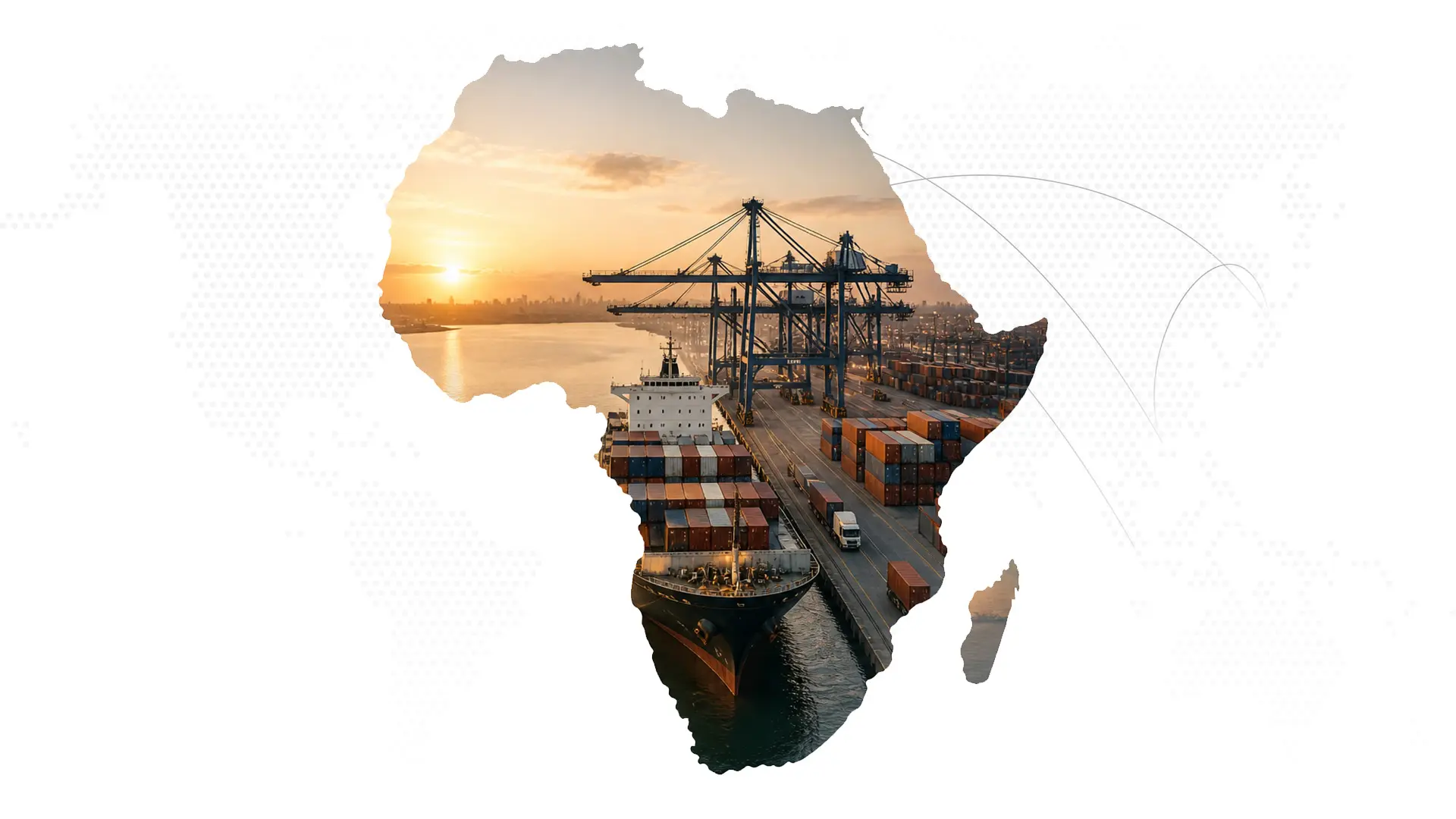
At this year’s GTR Conference in Cape Town, Arnaud Levasseur, Executive Vice President of Global Trade Solutions at MCB, and Chele Moyo, Executive Vice President of MCB South Africa Representative Office, participated in a fireside chat addressing a question of growing urgency for the continent: what does sustainable trade finance really mean for Africa? The numbers tell a story of two gaps. According to the OECD, Africa requires an additional USD 194 billion each year to meet the UN Sustainable Development Goals by 2030, while its trade finance gap is still estimated at between USD 80 billion and USD 120 billion annually. As Arnaud Levasseur underscored during the discussion, sustainability and trade competitiveness rise or fall together. But when Africa is priced through a lens of perceived risk, it faces tougher terms and higher costs. If the continent is to build resilient, inclusive growth, finance must be grounded in African realities and powered by conviction: investors and partners who believe in Africa’s potential and help push past today’s barriers.
Looking Beyond a Narrow ESG Lens
A central point in the discussion was that sustainability in Africa cannot be understood solely through imported assumptions. Global ESG conversations still tend to prioritise environmental metrics above all else. While vital, this narrow lens often fails to capture the full picture of the continent. That broader perspective is essential because Africa’s position is fundamentally different. The continent accounts for only around 4% of global greenhouse gas emissions, compared to approximately 25% for the G7. Consequently, its ESG priorities must extend beyond climate metrics to include supply chain, working conditions, access to electricity, skills development, and the wider social impact of economic transition. This is why the idea of a just transition matters so much. In Africa, sustainability cannot be a one-size-fits-all model designed in distant boardrooms. It must recognise that development gaps remain significant, and that transition pathways differ markedly across markets. With approximately 600 million Africans still lacking reliable access to electricity, affecting everything from healthcare to productivity, sustainable finance cannot simply reward projects that already meet neatly defined external criteria. It must actively support the economic and social foundations that enable long-term sustainability.
Africa Led Sustainability in Action : CNOI and the Captain Arctic
A powerful example of Africa’s transformation and its ability to create greater value by leveraging indigenous capabilities can be seen in Mauritius. Chantier Naval de l’Océan Indien (CNOI) has delivered what is widely acclaimed as the world’s “First truly sustainable” polar expedition vessel: Captain Arctic. This achievement is not just a technical milestone, it is an emblem of how African entities are charting a new course in global sustainability, using their expertise to redefine value creation on their own terms. Purpose-built for luxury expeditions in sensitive environments like Svalbard, Greenland, and Norway, the 230-foot vessel welcomes 36 guests in 19 cabins. Every aspect of its design is rooted in sustainability: five 35-meter solar sails with more than 2,000 square meters of solar panels, advanced generators and battery storage, hydro turbines within the propeller shafts, and a pellet boiler powered by recycled wood waste. The ship’s biofuel engine runs on vegetable oil, while reverse osmosis produces freshwater onboard. Its zero-waste operations are achieved through organic food digesters and cutting-edge water treatment that converts waste into potable water. Each feature demonstrates that African innovation is not only matching global standards but setting new ones. Beyond environmental stewardship, Captain Arctic stands as a testament to the continent’s transformation journey. Built in Mauritius, the project is a showcase of regional talent and technical excellence in sustainable engineering, advanced manufacturing, and maritime innovation. It provides skilled jobs, cultivates specialized knowledge, and integrates African industry into global clean-tech value chains. For Africa, sustainability is inseparable from economic inclusion, skills transfer, and job creation, areas where local capabilities are now unlocking far-reaching value and inspiring a new generation of innovators. Arnaud Levasseur’s insight resonates powerfully: ESG principles, rooted in the UN Sustainable Development Goals (SDGs), encompass far more than climate action. Africa’s transformation journey is about poverty reduction, food security, employment creation, infrastructure development, and inclusive economic growth, areas where homegrown innovation is creating measurable value. The often-overlooked “silent S” in ESG, social sustainability, is central to Africa’s progress. Inclusion, resilience, and skills development are not side issues; they are the foundation of sustainable value creation. Empowering local businesses to participate in trade and value chains is vital. Frameworks like the International Trade and Forfaiting Association’s Social Return on Investment (SROI) highlight how African initiatives are driving outcomes in employment, education, access to vital services, food security, housing, and cultural preservation. As Africa’s transformation accelerates, its entities continue to demonstrate their potential to create more value, on their own terms and for the world.
The Trade Finance Gap is also a confidence issue
As Chele Moyo noted, Africa’s trade finance gap is too often framed solely as a capital issue. In reality, it is equally a matter of risk perception, transaction structuring, and investor confidence. SMEs are among the most affected, facing persistent barriers to accessing trade finance despite being critical drivers of employment and value creation. More nuanced, development-aligned sustainability frameworks can help direct capital toward African exporters, particularly smaller firms, by aligning financing structures with real economic and social outcomes rather than abstract benchmarks. Arnaud Levasseur highlighted that heightened perceptions of risk continue to dampen trade activity. Overseas suppliers increasingly hesitate to extend credit to African counterparties, contributing directly to the widening trade finance gap and limiting African participation in global value chains.
Trade Finance as a Catalyst for Social Impact
In a remarkable example of the power of well-structured trade finance, a supply-chain finance transaction in an African nation brought transformative change to its education sector. This initiative didn’t just bridge confidence and capital gaps, it unlocked measurable social progress and inspired hope across communities. By financing the import of cutting-edge, energy-efficient printing equipment from a globally respected supplier, the facility empowered local producers to manufacture textbooks, fueling a government vision for self-sufficiency in educational materials. The transaction’s innovative structure, blending funded and unfunded facilities, ensured risk mitigation across the cross-border value chain, enabling this positive leap forward. The ripple effects of this project reach far beyond the transaction itself. Local textbook production advances the nation’s goal of educational independence, ensuring every child has access to learning resources. The new equipment cuts power consumption by up to 30%, slashing operational costs and reducing environmental impact, proving that progress doesn’t have to come at the planet’s expense. Most importantly, this initiative embodies the core purpose of education: unlocking human potential and inspiring future generations. When trade finance is aligned with development priorities, it doesn’t just build economic resilience, it ignites hope, uplifts communities, and lays the foundation for a brighter, more inclusive tomorrow.
Building on Regulatory Strides in Mauritius
Mauritius’ recent adoption of a legal framework recognising electronic bills of exchange marks a transformative step for Africa’s trade ecosystem. By granting full legal equivalence to digital trade instruments, these reforms enable faster settlement, reduced operational risk, and seamless integration with global digital trade platforms. This regulatory advancement reinforces Mauritius’ role as a modern International Financial Centre. The Mauritius IFC is now well positioned to serve as a secure, digitally enabled bridge between African exporters, global supply chains, and international investors, enhancing transparency, accelerating liquidity access, and strengthening the region’s capacity to scale sustainable trade. As Arnaud Levasseur emphasised, collaboration remains essential. By leveraging the complementary strengths of African economies, institutions, and partners, the continent can meaningfully reduce its trade finance gap and unlock long-term growth.
A More Relevant Framework for Africa
The strongest takeaway from Cape Town was a call for alignment. For MCB, the path forward lies in a collaborative effort between governments, banks, multilaterals, and the private sector to establish frameworks that enable, rather than constrain, African trade. For sustainable trade finance to deliver real impact, it must be rooted in Africa’s constraints, aligned with its priorities, and designed to support its unique development path.
The Path Forward—Collaboration Rooted in African Solutions
Closing Africa’s trade finance and development gaps will require concerted action from all stakeholders, governments, financial institutions, DFIs, investors, and businesses, to co-create frameworks that reflect the continent’s realities and ambitions. Sustainable trade finance in Africa cannot be imported wholesale. It must be shaped by African leadership, grounded in local insight, and focused on outcomes that build resilience, inclusion, and competitiveness. Ultimately, Africa’s sustainable trade future must be defined by Africans, for Africans. With coordinated action and shared conviction, the continent can lead the way in building a resilient, inclusive, and sustainable trade ecosystem for generations to come.
Recent Articles





TH!NK


.webp?sfvrsn=bdba599c_1)

Subscribe to our Email Alerts
Stay up-to-date with our latest releases delivered straight to your inbox.
Contact
Don't hesitate to contact us for additional info
Email alerts
Keep abreast of our financial updates.