

Krishen Patten

Head of Private Wealth Management International
- Home
- About us
- Investors Centre
- Sustainability
- Talent
- News
- Insights
- TH!NK
- MCB Offices
Contact Info
26 NOV 2026
The long game: A family business must learn to outgrow its founder

Family businesses are often praised for thinking in generations rather than quarters. But longevity is not an inheritance. It has to be built, and that means creating a business capable of prospering without the people who created it.
At the FBN-IESE Africa Conference in Barcelona, held from 11 to 13 November, the theme “Family Businesses: Building Legacies That Last” brought together discussions around three intertwined challenges: preparing the next generation, building businesses across borders and ensuring that family enterprises continue to contribute to the communities around them.
One thought captured the tension particularly well: a family merely borrows its business from the next generation. It is an appealing definition of stewardship, but also a demanding one. The real test of a family business is not whether ownership passes from one generation to another, but whether the founder’s success can become an institution that over time no longer depends on the founder.
That is harder than it sounds. The qualities that build successful companies, instinct, personal relationships and concentrated authority, can become weaknesses when the business must outlast its creator. Entrepreneurs spend decades making themselves indispensable. Building a legacy ultimately requires them to do the opposite.
Succession should therefore be treated as institutional design, not as an event triggered by retirement. The important questions are practical: who can join the business, with what experience, at what level and with what authority? Some established family firms require the next generation to gain experience elsewhere. Others separate family ownership from executive management, with relatives contributing through the board while professional managers run the business.
Such rules also force families to distinguish equality from fairness. A family member managing the company carries different responsibilities from one who is solely a shareholder. Ownership, remuneration and authority need not follow the same logic. Ambiguity may preserve harmony for a while; clarity is more likely to preserve the business.
There is an obvious risk in taking governance too far. Family firms often thrive precisely because they are agile, entrepreneurial and able to take decisions without the machinery of a large corporation. Governance that extinguishes those advantages defeats its purpose. But the greater risk is dependence: discovering during a succession or dispute that too much authority, knowledge and influence remained concentrated in individuals rather than institutions.
What succession tests across generations, expansion tests across borders. This matters particularly in Africa, where the idea of a single “African market” is misleading. Countries differ in their institutions, regulations, commercial practices and cultures. A successful business model cannot simply be exported with a new address.
Local understanding is therefore part of investment discipline. So is choosing the right partners. Capital may finance entry into a market, but relationships, cultural fluency and local knowledge often determine whether a business can build a durable position there.
Africa’s young population will create opportunities, but demographics alone are not a strategy. Family businesses must determine where their capabilities give them a genuine advantage, market by market. The objective should not be expansion for its own sake, but expansion that strengthens rather than stretches the institution.
There is also a broader dimension to legacy. A family enterprise exists within the societies that enable it to prosper. Its longevity depends not only on transferring ownership or preserving wealth, but on remaining relevant to employees, customers and communities as expectations change. Thinking in generations should therefore widen the definition of value creation, rather than simply lengthen the period over which financial returns are measured.
Internationalisation adds another layer. As businesses cross borders and generations, questions about corporate growth increasingly intersect with questions about preserving, diversifying and transferring the wealth they create. What begins as a question of business succession eventually becomes one of stewardship across both the enterprise and the family.
Financial institutions consequently have a role beyond financing the next transaction. For MCB, this means taking a long-term view of both sides of the equation: the financing and transactional requirements of businesses operating across African markets, alongside the questions of wealth preservation, diversification and succession facing the families behind them. Mauritius, as an international financial centre, can also form part of that broader approach to diversification.
The principle is not to blur corporate finance and wealth management, but to recognise that their horizons eventually converge. A family thinking in generations needs institutions capable of understanding not only its next investment, but how its business, ownership and wealth may evolve over time.
That is perhaps the most important lesson from Barcelona. Family businesses possess something increasingly valuable in modern commerce: the ability to take a long view. But time is not, by itself, a competitive advantage. It becomes one only when it is used to prepare a business for a future in which its founders are no longer at the centre of it.
Succession must therefore be discussed before it becomes urgent, rules agreed before interests diverge, markets understood before capital is committed and wealth preservation considered with the same discipline as wealth creation. Building a legacy that lasts is not simply about keeping a business in the family. It is about creating an institution capable of adapting across generations, markets and societies.
That is the harder standard for a family legacy. The next generation should inherit more than the business its founders built. It should inherit a business capable of building the generation after that.

Explore more



Recent Articles
23 Nov 2026
MCB Research: Mauritius growth to reach 3.4% in 2027, driven by investment

12 Nov 2026
Profits of Rs 5.4 billion for first quarter of FY 2026/27

06 Nov 2026
MCB and GreenYellow: Rs 940 million to finance 17 solar power plants

04 Nov 2026
Sustainability Report 2026 : MCB’s sustainable finance delivers real impact
22 Oct 2026
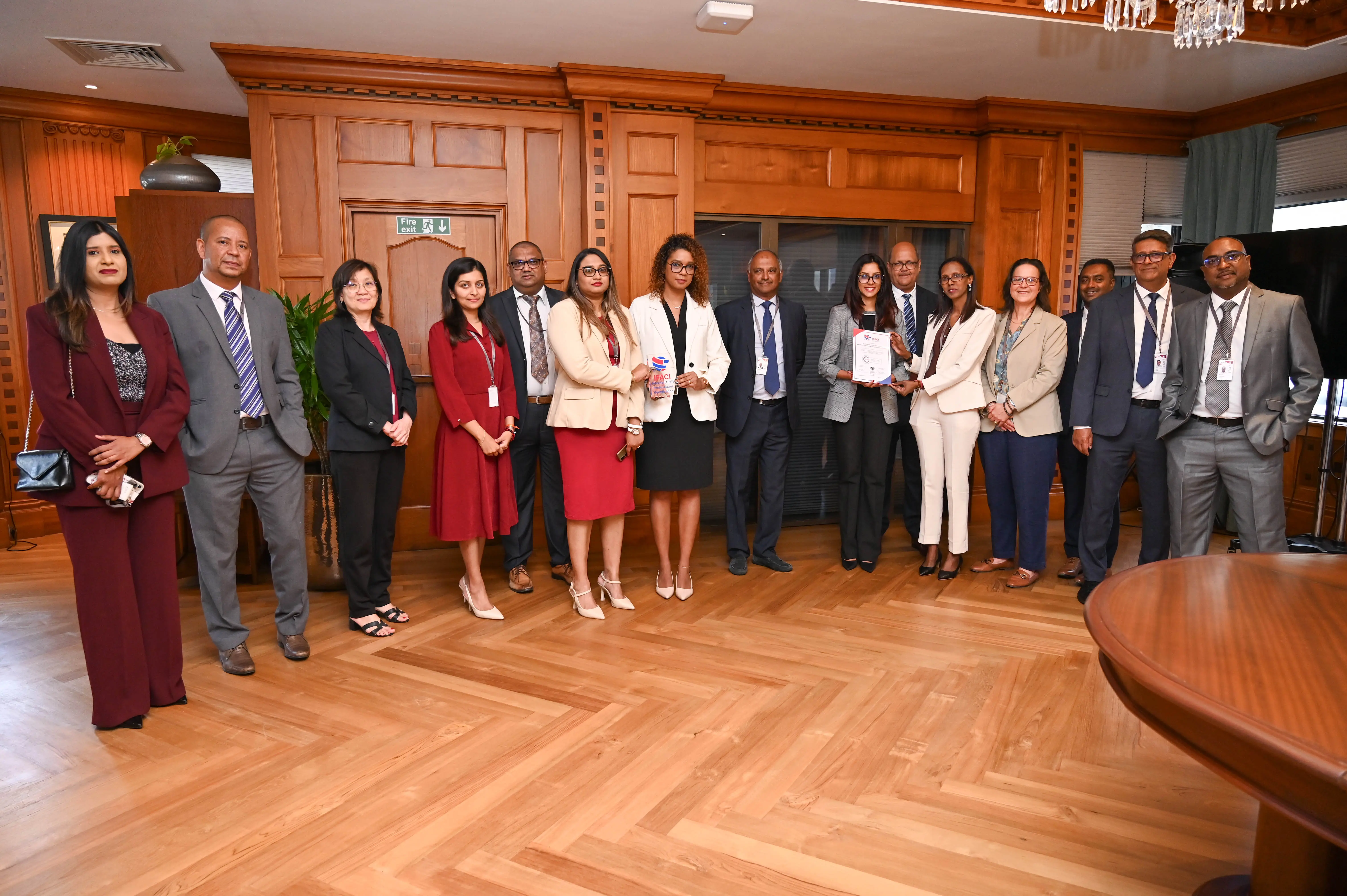
Governance: MCB becomes the first IFACI-certified institution in Mauritius
TH!NK

23 Nov 2026
The people behind our people

29 Oct 2026
What if the real promise of technology is to take SME banking beyond banking?

26 Sep 2026
Kim Le Court, the race that slipped away

25 Sep 2026
Tristan Hardy finishes 76th at Junior Road Race World Championships

23 Sep 2026
Kim Le Court : The power of belief, the strength of a nation
Subscribe to our Email Alerts
Stay up-to-date with our latest releases delivered straight to your inbox.
Contact
Don't hesitate to contact us for additional info
Email alerts
Keep abreast of our financial updates.